Cable Gland Installation for Stable Long-Term Performance
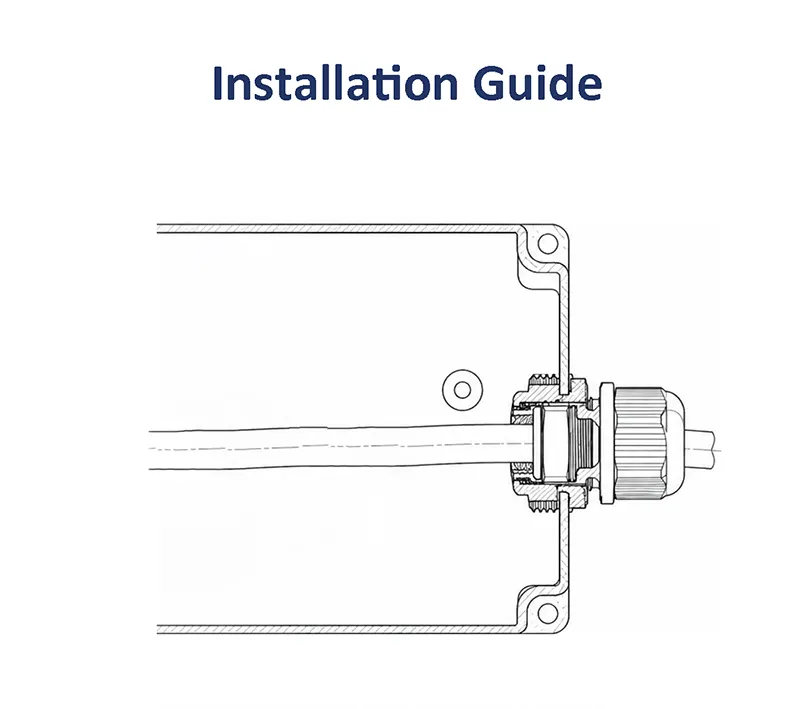
INSTALLATION GUIDE
Correct installation is essential for maintaining sealing integrity, cable retention force, and enclosure protection throughout continuous industrial operation.
CHSO cable glands are designed for efficient installation in electrical cabinets, automation equipment, outdoor enclosures, and power distribution systems.
Installation Process Overview
Installation Stage | Main Inspection Point |
Cable Selection | Verify cable diameter matches sealing range |
Mounting Preparation | Ensure flat and clean enclosure surface |
Gland Assembly | Maintain correct thread engagement |
Cable Tightening | Achieve stable sealing compression |
Final Inspection | Confirm fastening and sealing condition |
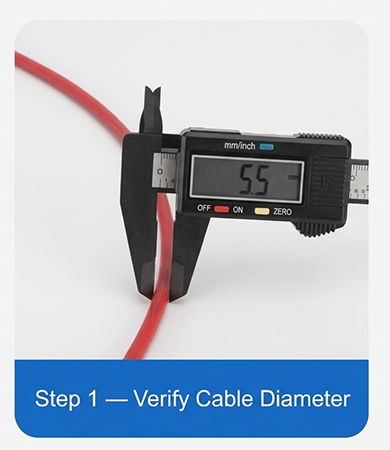
Step 1 — Verify Cable Diameter
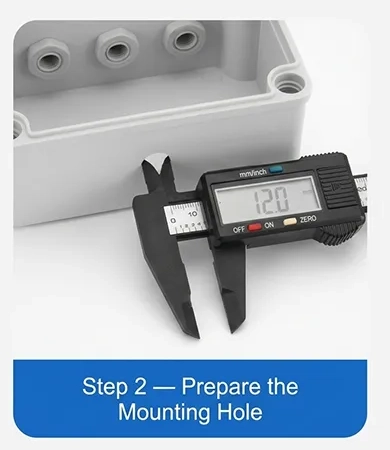
The mounting surface should remain:
- Clean
- Flat
- Free from burrs
- Free from excessive coating buildup
Uneven contact surfaces may reduce gasket effectiveness and affect enclosure protection performance.
Step 2 — Prepare the Mounting Hole
Confirm that the cable outer diameter falls within the specified sealing range of the cable gland.
Incorrect cable sizing may affect:
- Waterproof performance
- Strain relief stability
- Compression consistency
- Long-term sealing reliability
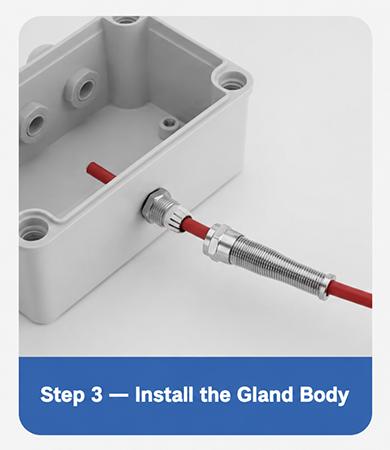
Step 3 — Install the Gland Body
Insert the gland body into the enclosure opening and secure it using the required fastening method.
Common installation methods include:
- Locknut fastening
- Threaded enclosure installation
- Through-hole mounting
Thread engagement should remain smooth and properly aligned during assembly.
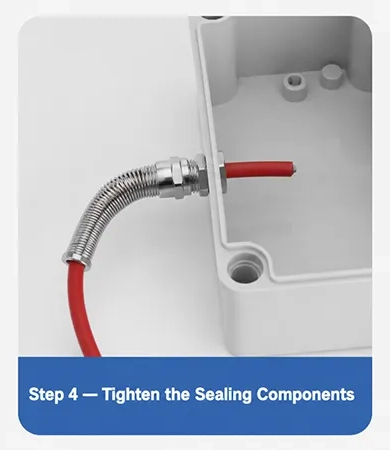
Step 4 — Tighten the Sealing Components
After cable insertion, tighten the sealing cap evenly to create stable compression around the cable jacket.
Proper tightening helps maintain:
- Cable retention stability
- Ingress protection performance
- Anti-vibration resistance
- Mechanical reliability
Excessive tightening may shorten sealing component lifespan, while insufficient tightening can reduce sealing effectiveness.
Step 5 — Final Inspection
After installation, verify:
- Cable alignment
- Thread engagement
- Sealing component positioning
- Tightening condition
- Enclosure contact surface
For outdoor or vibration-intensive applications, periodic inspection is recommended during scheduled maintenance.
Typical Installation Environments
Industrial control cabinets
Solar combiner boxes
Outdoor electrical enclosures
Automation systems
Marine electrical equipment
EV charging infrastructure
Power distribution systems
Operational Reliability
Stable installation quality helps maintain:
- Consistent enclosure protection
- Long-term sealing performance
- Reduced maintenance frequency
- Reliable cable retention
- Electrical system safety
Correct installation practices contribute directly to the long-term stability of industrial electrical equipment.