Cable Gland Thread Standards – Technical Reference Overview
THREAD CHART
Cable glands are produced in multiple thread standards to ensure precise fit and reliable sealing for industrial electrical installations. Understanding thread types, dimensions, and regional standards is critical for proper selection and avoiding installation errors.
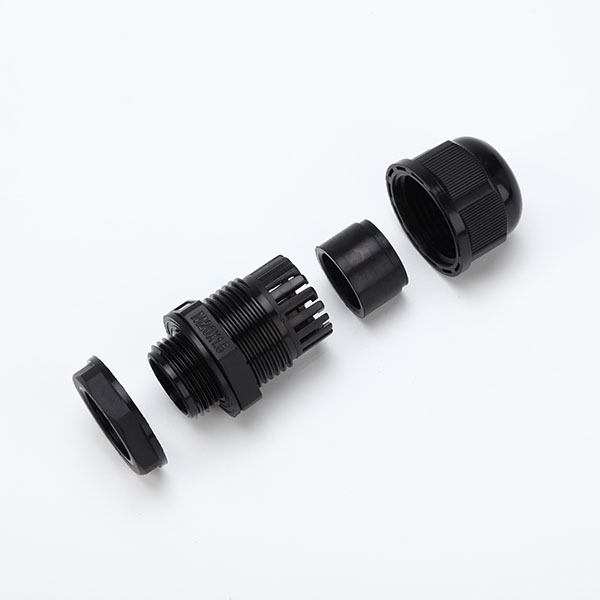
PG vs METRIC THREADS COMPARISON
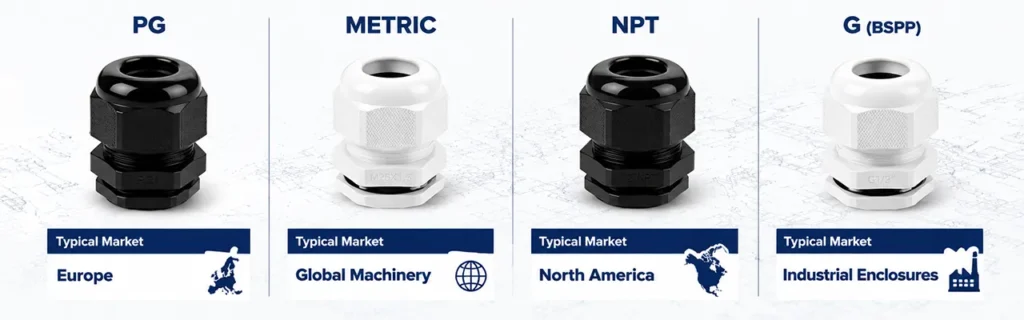
Thread Types
Thread Type | Description | Typical Market |
PG (Panzer-Gewinde) | German industrial standard widely used for electrical fittings | Europe |
Metric (M) | ISO metric threads for general machinery and industrial applications | Global |
NPT | Tapered thread used primarily in North America | North America |
G / BSPP | Parallel thread common in industrial enclosures | Asia, Middle East |
Key Point: Selecting the correct thread type ensures secure installation, proper sealing, and compatibility with regional electrical systems.
THREAD STANDARDS SELECTION GUIDE
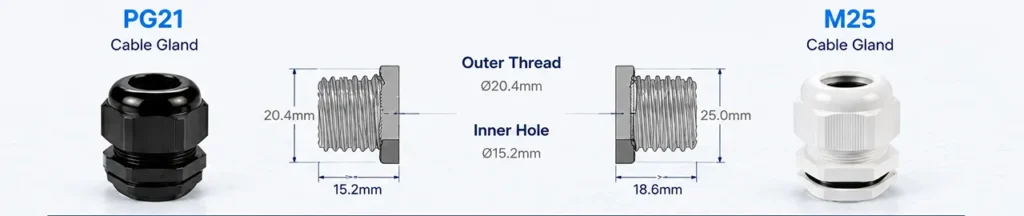
Thread Dimensions
Thread Type | Size Range | Standard Compliance | Practical Consideration |
PG | PG7 – PG63 | DIN 40430 | Premium and Standard glands share same cable range; direct replacement possible without modifying panels. |
Metric | M12 – M72 | ISO 261 / ISO 965 | Use for mechanical equipment with metric hole sizes; ensures tight fit and long-term durability. |
NPT | 1/4” – 2” | ANSI B1.20.1 | Preferred for North American electrical installations; taper threads maintain sealing under vibration. |
G / BSP | 1/4” – 2” | ISO 7-1 | Suitable for parallel thread conduits; ensures reliable waterproof sealing in outdoor cabinets. |
How to Identify Thread Standards
Measure thread diameter and pitch using a Vernier caliper or thread gauge.
Compare with technical standards: DIN 40430 (PG), ISO 261 (Metric), ASME B1.20.1 (NPT), ISO 228-1 (G/BSPP).
Check installation drawings to confirm compatibility with your enclosure.
Choose the thread standard that matches regional and project requirements.