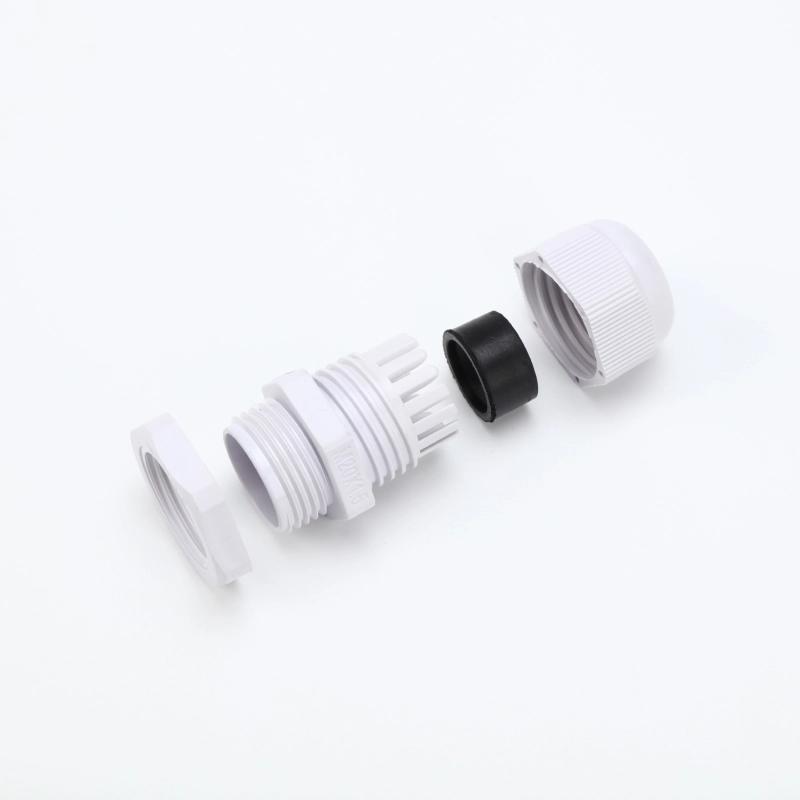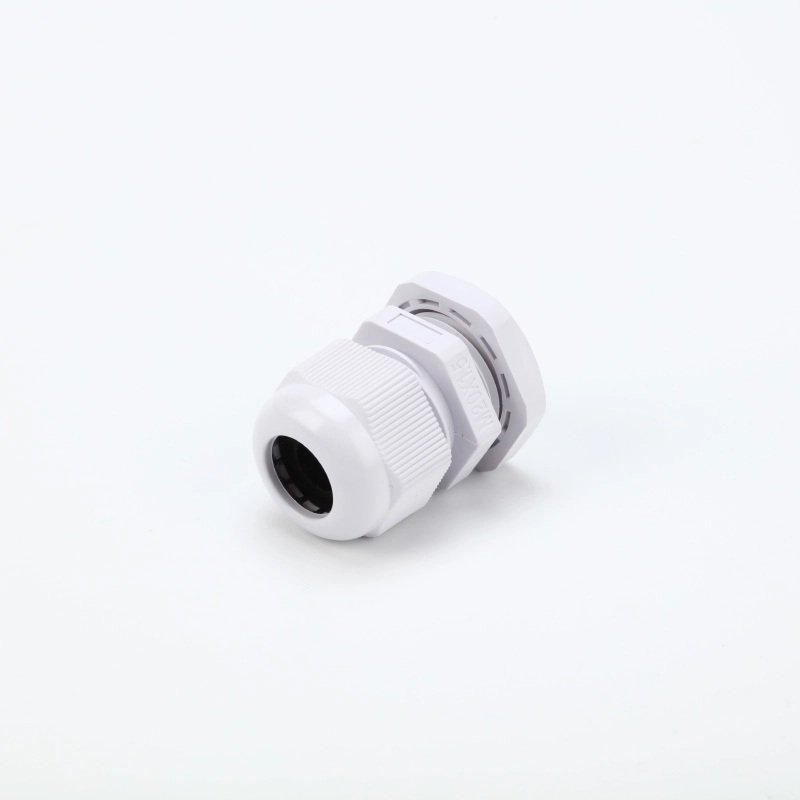
A cable may be sold under one conductor size while its finished outside diameter changes with insulation, shielding and jacket construction. That difference is small on a drawing and expensive on an assembly line. A gland chosen from the nominal cable description can sit near the edge of its sealing range, leaving little allowance for cable variation or production tolerances.
Start with the cable, not the thread
Record the actual minimum, typical and maximum outside diameter from the cable drawing or measured samples. Then confirm the entry thread, panel hole and environmental requirement. A gland is selected only when all four inputs agree.
Keep the working point away from the edge
A cable that only just enters the published range may assemble, but the margin is weak. Buyers should ask whether the range is based on the complete sealing system and whether the intended cable jacket is smooth, braided, corrugated or unusually soft.
Validate the combination
Use production cable, not a convenient substitute. Check insertion, tightening, cable retention and the required enclosure test after installation. If two cable suppliers are approved, test both extremes.
A numerical way to check the decision
Illustrative calculation: a gland range of 6–12 mm has a midpoint of 9 mm. A cable varying from 8.4 to 9.2 mm remains well inside the range. A cable varying from 11.6 to 12.2 mm does not; its upper tolerance exceeds the declared limit. This example explains the method and is not a CHSO product specification.
RFQ or approval checklist
- Cable minimum, nominal and maximum outside diameter
- Cable jacket material and surface
- Required thread and panel hole
- Required sealing and retention test
- Production cable sample for approval
The purchasing decision
The quickest way to reduce selection risk is to put the cable OD tolerance on the RFQ. A supplier can then recommend a model against a real working range rather than a nominal cable name.
Evidence boundary
Confirmed CHSO scope: cable glands are offered in multiple product families. Exact clamping ranges remain model specific and must be taken from the applicable datasheet.